Alimony and Cohabitation in New Jersey: A Private Investigator’s Perspective
Author: Bob Cowan, Cowan Investigations

A New Jersey cohabitation investigation focuses on identifying and documenting patterns of conduct rather than relying on a single observation or event. Depending on the circumstances, an investigation may include evidence related to:
No single factor necessarily establishes cohabitation. The investigator’s role is to gather and document objective facts and patterns that may assist the client’s attorney in determining whether sufficient evidence exists to establish a prima facie case of cohabitation.
Clients often call our office to discuss their belief that their ex-spouse (payee) is collecting alimony while cohabiting with another person.
When a client contacts us for advice on cohabitation, we let them know that we are not lawyers and cannot advise them as such. However, we can offer a client consultation that can help them understand the investigative goals we would look to achieve in a New Jersey cohabitation investigation.
These investigative objectives, if achieved, would be established through patterns identified during a New Jersey alimony/cohabitation investigation. The evidence acquired during the investigation would be organized into a comprehensive and cohesive report that is forwarded to the client’s attorney.
During this first consultation, I stress to the client (payor) that cohabitation is proved by “patterns, not by isolated events.”
Discussion with the payor of alimony will transition into what the client actually knows about the payee’s current lifestyle. The intake interview will include the following patterns, which will be addressed separately.

As I indicated earlier, it is possible to establish a case for cohabitation under New Jersey law even if the payee’s partner maintains his or her own residence. However, making that case for cohabitation becomes more difficult and likely more expensive.
To be clear, the payee receiving alimony does not surrender the right to have a relationship, whether dating or serious. Either type of relationship can result in a couple staying overnight at one another’s homes.
It is the investigator’s job to pin down the overnight presence of the payee and the partner at each other’s homes.
Presence alone will not make a prima facie case of cohabitation. Other elements of the statute must dovetail with any presentation of overnight presence involving the payee and a partner.
I stress to the client that although many investigative activities and observations can be achieved concurrently, it is most helpful to determine whether a couple is staying overnight together 50 percent of the time or more. This can help determine whether the payor should continue with the investigation and its associated costs.
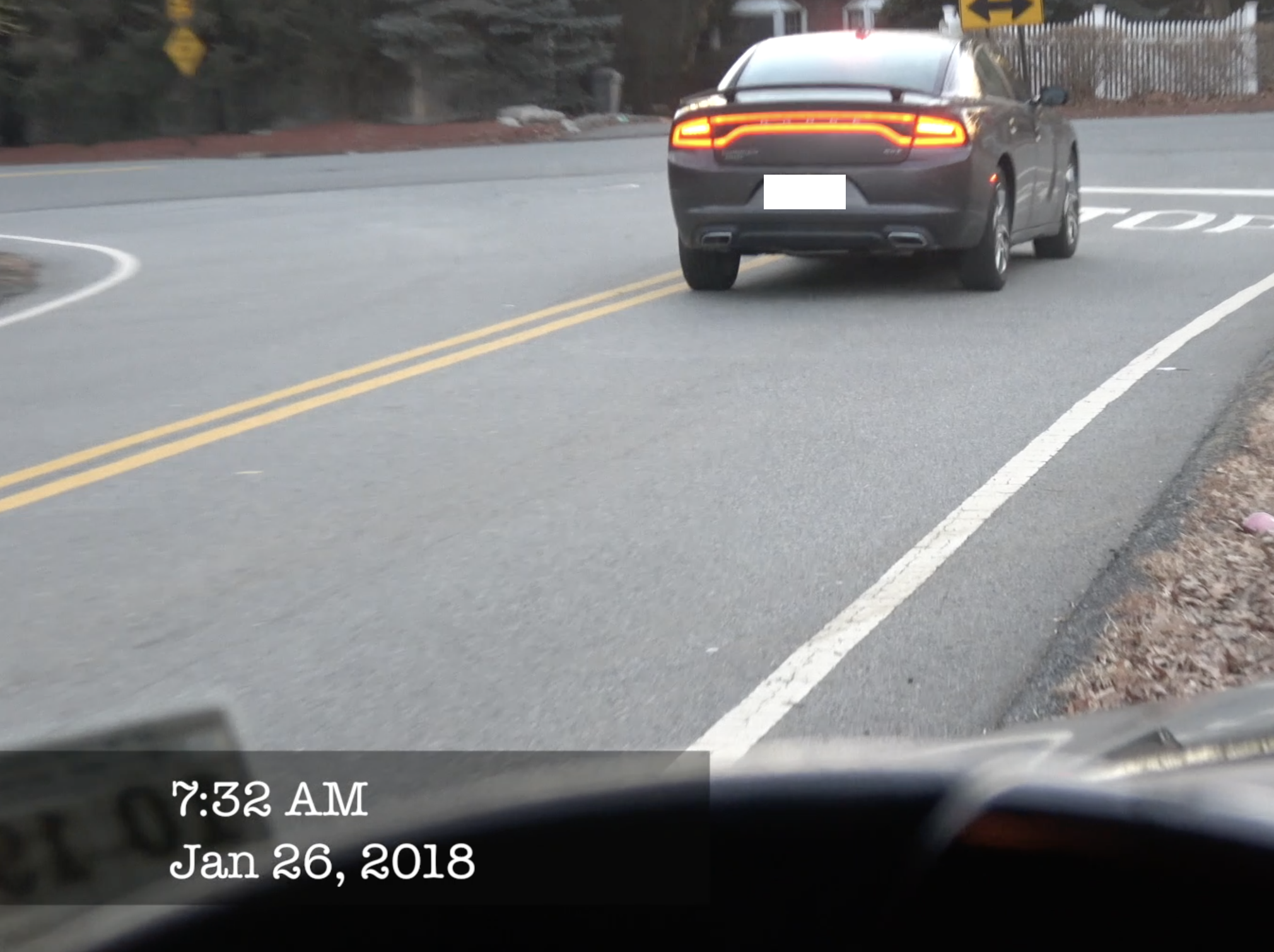
One of the most effective methods utilized in New Jersey cohabitation investigations is determining a pattern of a specific person’s presence at a specific residence by documenting the presence of a vehicle at that location.
The vehicle may not always be clearly identifiable through a registration check. There are other methods of connecting a vehicle to a specific person by obtaining evidence that the vehicle is recurrently under that person’s custody and control.
The presence of a vehicle at a specific home or location can provide powerful corroborating evidence of a pattern of conduct when coupled with other evidence and viewed collectively.
The presence of vehicles at one of the subjects’ homes can also provide strong corroborating evidence when determining the number of overnight stays a couple may be having together.
In states that restrict private investigators from running plate checks and receiving registrant information, it is critically important to develop information about exactly who has custody and control of a specific vehicle.
The first state that comes to mind is Pennsylvania, where registrant information is not provided. I have personally experienced this limitation in several cases I investigated where one of the subjects resided in Pennsylvania.
In those situations, an alternative approach becomes necessary: identifying the subject who has custody and control of the vehicle on a regular basis.
While a single overnight stay by a boyfriend or girlfriend may have limited evidentiary value, the repeated and consistent presence of an individual at a residence over an extended period often becomes a significant factor in a cohabitation investigation.
Professional investigators are frequently tasked with documenting not merely whether an individual visits a residence, but the frequency, duration and regularity of those visits.
This information can be critical in developing a prima facie case of cohabitation sufficient to permit the client to obtain discovery.
Patterns developed through surveillance can be particularly informative. For example, an investigator may observe the same vehicle arriving at a residence during evening hours, remaining overnight and departing the following morning on multiple occasions over a period of weeks or months.
Such observations may suggest that the individual is maintaining a routine more consistent with residency than occasional visitation.
Clients should view the preparation of a cohabitation case as a marathon rather than a sprint.
Developing a persuasive prima facie case takes time and requires a methodical accumulation of evidence. Equally important, the investigation should anticipate and address the explanations and defenses that will likely be advanced by the opposing party.
The strongest cases are often those in which evidence has been gathered not only to support the claim of cohabitation but also to rebut anticipated counterarguments.
Equally important is the consistency of the observed pattern. The repeated presence of an individual on weekdays, weekends, holidays and during ordinary daily activities may provide a more complete factual picture than isolated observations.
Investigators seek to determine whether the relationship exhibits characteristics commonly associated with a shared domestic life rather than sporadic social interaction.
It is important to note that surveillance alone does not establish cohabitation. Rather, surveillance serves to document observable facts that may later be considered in conjunction with other evidence.
Such evidence may include intertwined finances, the sharing of living expenses, recognition of the relationship within the couple’s family and social circles, the duration of the relationship, the sharing of household responsibilities, and other indicia of a mutually supportive and intimate personal relationship. This list is not intended to be exhaustive.
The investigator’s role is not to draw legal conclusions but to accurately document objective observations that may assist attorneys, clients and, ultimately, the court in evaluating the nature of the relationship.
Like the other elements of cohabitation discussed in this article, observations of daily routine and domestic activity rarely stand alone.
Rather, they become significant when viewed collectively with other evidence such as overnight presence, vehicle patterns and the regular use of a residence.
No single factor is likely to establish cohabitation by itself. Instead, it is the accumulation of evidence from multiple sources that often forms the foundation of a prima facie showing sufficient to warrant further discovery.
One of the primary objectives of a cohabitation investigation is to determine whether two individuals are functioning as a household unit rather than maintaining a casual dating relationship.
To that end, investigators seek to document routine activities that demonstrate integration into the daily operation of the residence.
While some of these activities may appear mundane when viewed individually, they can become highly significant when observed repeatedly over time.
Examples of domestic and household activities may include:
The significance of these observations is not found in any single event.
Rather, repeated documentation of such activities over an extended period may demonstrate a lifestyle and routine more consistent with cohabitation than occasional visitation.
When combined with other investigative findings, these observations can become an important component of a comprehensive cohabitation investigation.
Capturing the types of evidence discussed above is an intricate part of a successful cohabitation investigation.
In many instances, documenting domestic activity at a residence is not easy to accomplish. Activities such as retrieving mail, walking household pets, performing yard work, transporting children or simply entering and exiting a residence may appear routine, but obtaining clear and persuasive evidence of those activities often requires significant planning and experience.
To properly document this evidence, surveillance must be conducted correctly.
Residential surveillance presents unique challenges, and investigators who simply park a few houses away and hope to observe meaningful activity are often disappointed.
More importantly, poorly executed surveillance can alert subjects and neighbors to the investigator’s presence, potentially compromising the entire investigation.
In many situations, effective surveillance requires the investigator to remain concealed while maintaining a clear view of the residence. This often involves operating from within a properly configured surveillance vehicle that blends naturally into the neighborhood environment.
Using window tint, interior concealment systems and strategic positioning, an investigator can observe activity while minimizing the likelihood of detection.
Putting vehicular surveillance aside for a moment, one of the most effective investigative tools available in appropriate circumstances is the use of a properly deployed concealed camera capable of providing a live video feed.
When legally and professionally installed, these systems can provide investigators with continuous observation of a location and often reveal patterns of activity that would be difficult to document through physical surveillance alone.
Properly deployed concealed camera systems can provide a wealth of information regarding the daily activities occurring at a residence. In many cases, the evidence obtained can quickly assist the client and attorney in determining whether the facts support continued investigation and litigation.
When retaining a private investigator to deploy surveillance equipment, clients should ensure that all work is performed in compliance with applicable laws and regulations.
In New Jersey, clients may wish to confirm that any investigators or employees involved in the operation satisfy the licensing, registration and background requirements established by the New Jersey State Police.
It is also important to understand the realities of conducting surveillance in modern residential neighborhoods.
An investigator who sits visibly in a vehicle for extended periods is likely to attract attention. Neighbors may approach the vehicle, contact law enforcement or post descriptions of the vehicle and its occupants on neighborhood social media platforms.
Once an investigator’s presence becomes known, the effectiveness of the surveillance may be significantly diminished.
Clients often invest substantial sums of money pursuing a cohabitation investigation. Because the objective is frequently to establish a prima facie case sufficient to obtain discovery, there may be only one meaningful opportunity to gather the necessary evidence.
For that reason, selecting an investigator who understands the complexities of residential surveillance and possesses the proper equipment, training and experience can be critical to the success of the case.
The nature and extent of a couple’s travel together can be an important factor in a cohabitation investigation.
Whether the parties travel alone as a couple or participate in vacations that integrate their respective children and families, such activities may provide insight into the seriousness and permanence of the relationship.
In New Jersey Family Courts, evidence of shared travel may be considered as part of the totality of circumstances when determining whether a prima facie case of cohabitation has been established.
During the intake phase of a New Jersey cohabitation investigation, clients frequently report that their former spouse has traveled repeatedly with a romantic partner.
These trips may involve weekend getaways, extended vacations, holiday travel, cruises, destination weddings or family vacations involving children from prior relationships. Such activities may suggest a level of commitment and family integration that extends beyond casual dating.
In many cases, clients already possess evidence of these trips.
Photographs posted on social media platforms often provide valuable information regarding the timing, duration and nature of the travel. Evidence may originate from the social media accounts of the parties themselves, their children, relatives or even mutual friends.
While some individuals carefully restrict public access to their social media accounts, others voluntarily publish significant details regarding their personal lives, travel activities and relationships.
Even when social media evidence is limited, information regarding travel may still become important later in the litigation. Investigators should document known or suspected travel dates whenever possible.
If a prima facie case of cohabitation is ultimately established and the matter proceeds to discovery, financial records may reveal additional evidence of shared travel.
Credit card statements, bank records, hotel charges, airline purchases, cruise bookings, vacation rental payments and other financial documents may corroborate that the parties traveled together and shared expenses associated with those trips.
Ideally, all relevant evidence would be obtained before a motion is filed with the court. However, cohabitation investigations often develop over time.
If the overall evidence supporting cohabitation is sufficiently strong, it is not necessary for every factor associated with cohabitation to be fully documented at the outset of the case.
Evidence of shared travel may later serve as an additional component supporting the broader pattern of an intertwined and committed relationship.
During an alimony/cohabitation investigation, there are many nuances a private investigator must recognize when determining what actually constitutes evidence.
If an investigation is being conducted methodically, an investigator may be able to determine through the client interview and his or her own observations what could — and could not — reasonably be considered the personal belongings of a cohabitor.
For example, during surveillance, an investigator may observe a male cohabitor roll a large Harley-Davidson motorcycle out of the garage of the alimony recipient and ride away on it. At minimum, the circumstances may suggest that the motorcycle belongs to him.
When documenting observations, however, investigators should avoid assigning ownership to personal property unless evidence supports that conclusion.
If an investigator repeatedly observes a male companion removing the same Harley-Davidson motorcycle from the garage of the alimony recipient and operating it, it may be reasonable to infer that the motorcycle belongs to him.
However, absent independent verification, the investigator should avoid stating ownership as fact.
Instead, the report may indicate that the motorcycle is reasonably believed to belong to the companion or that, on each observed occasion, the motorcycle was in his custody and control.
Maintaining this distinction helps preserve the investigator’s credibility and ensures that observations remain factual and defensible.
Another method of identifying personal belongings maintained at a residence is through a garbage or recycling pull.
This investigative technique involves examining trash or recyclables that have been placed at the curb for collection. Such examinations may reveal evidence of a cohabitor’s presence within the residence, including prescription bottles, shipping labels, delivery boxes, receipts or other items bearing the cohabitor’s name.
When conducting a garbage or recycling pull, investigators must remain mindful of both legal and practical considerations.
First, investigators should never enter private property to retrieve trash or recyclables.
Second, this type of investigative activity is often best conducted toward or at the conclusion of an investigation. If the investigator is observed or confronted while performing the activity, the investigation may be compromised and future surveillance efforts may become significantly more difficult.
Occasionally, during an alimony/cohabitation investigation, the residence of the alimony recipient may be listed for sale. When this occurs, additional opportunities may exist to lawfully observe portions of the residence that would otherwise be inaccessible to an investigator.
For example, during an open house or scheduled showing available to prospective purchasers, an investigator may be able to observe items that are openly visible within the residence.
Such observations may include clothing, personal effects, family photographs, recreational equipment, tools or other items that may be relevant to determining whether another individual is maintaining a presence within the home.
Naturally, investigators must limit their observations to areas lawfully accessible to members of the public and should not open drawers, cabinets, medicine chests or other closed containers.
In some instances, observations made during a lawful walkthrough may corroborate evidence previously obtained through surveillance, interviews, public-record research or other investigative methods.
As with all evidence gathered during a cohabitation investigation, these observations should be evaluated in the context of the totality of the circumstances rather than as isolated facts.
An essential component of virtually every New Jersey alimony and cohabitation investigation is the strategic use of social media, open-source intelligence (OSINT) and proprietary databases available to licensed private investigators.
These investigative tools often underpin the entire investigation, allowing the investigator to adapt to changing circumstances that frequently arise during a cohabitation inquiry.
In many cases, the investigative process begins during the initial consultation with a prospective client.
While speaking with the client, an experienced investigator may simultaneously review publicly available social media accounts, conduct open-source intelligence research and examine mapping imagery of properties relevant to the investigation.
This preliminary research helps the investigator develop an investigative strategy, identify potential surveillance locations and assess the likelihood that evidence supporting cohabitation may be obtained.
While every investigation presents unique challenges, the objective remains consistent: to develop sufficient evidence to establish a prima facie case of cohabitation.
Social media platforms can be particularly valuable sources of information.
Individuals routinely post photographs, videos, comments and location information that may reveal significant details about their relationships, living arrangements, travel patterns and daily activities.
In addition to the subjects themselves, family members, friends and associates frequently post content that may prove relevant as an investigation progresses.
It is difficult to overstate the potential value of social media evidence.
Through social media review, investigators may identify a couple attending weddings, religious services, family gatherings, social events, vacations, children’s activities, sporting events and numerous other functions.
Documentation of these activities can become compelling evidence demonstrating the nature of the relationship and may assist in establishing the level of commitment and integration between the parties.
It is also common for clients to provide screenshots or archived social media content collected over months or even years.
Such historical information can provide important context regarding the development and duration of a relationship.
When combined with current social media activity, investigators can often identify patterns of conduct, shared travel, recurring overnight stays and other behaviors that may be consistent with cohabitation.
The value of social media evidence in an alimony and cohabitation investigation cannot be overstated.
When properly collected, preserved and corroborated through traditional investigative methods, social media and open-source intelligence can provide critical leads, strengthen surveillance findings and assist in establishing the broader pattern of conduct that courts often consider when evaluating claims of cohabitation.
Significant information may also be obtained through open-source intelligence research.
Investigators routinely utilize internet search engines, property records, mapping imagery, business records, court filings and other publicly available sources to develop investigative leads and plan surveillance operations.
In many cases, simply conducting a comprehensive search of a subject’s name may reveal valuable information relevant to the investigation.
In addition to publicly available information, licensed private investigators have access to proprietary investigative databases that are generally unavailable to the public.
These databases may assist investigators in identifying addresses, associates, telephone numbers, historical records, business affiliations, property ownership and other information that may aid in the development of investigative leads.
Information obtained from proprietary databases should be viewed as a lead-generating tool and, where appropriate, independently verified through additional investigation.
Many investigators have also begun utilizing paid artificial intelligence (AI) platforms as research tools.
These platforms can assist in identifying potential leads, locating publicly available information and organizing large amounts of data.
However, information obtained through AI platforms should never be accepted at face value. AI-generated information must be independently verified through reliable sources, as inaccuracies and hallucinations remain common.
Any information developed through AI-assisted research should be documented appropriately, and the method of verification should be clearly explained within the investigative report.
When properly utilized, social media, open-source intelligence, proprietary databases and emerging AI technologies provide investigators with powerful tools to identify leads, corroborate evidence and develop a more comprehensive understanding of the relationship being investigated.
These resources, when combined with traditional surveillance and investigative techniques, can significantly enhance the overall effectiveness of a cohabitation investigation.
The existence of financial entanglements is frequently discussed in New Jersey cohabitation litigation.
However, many forms of financial evidence are not readily available to private investigators.
Information such as bank records, credit card statements, utility payments, insurance policies and electronic payment histories is generally obtained through formal discovery conducted by counsel.
Consequently, the role of the private investigator is often to develop sufficient factual evidence through surveillance, social media review, open-source intelligence and related investigative techniques to assist counsel in establishing a prima facie case of cohabitation.
Once that threshold has been met, additional financial evidence may become available through the discovery process.
That said, there are occasions when investigators may develop evidence relating to financial entanglements through lawful investigative means.
For example, documents discarded by a subject and placed for collection may, under appropriate circumstances, provide information concerning residency, household expenses, account activity or other issues relevant to the investigation.
While such occurrences are relatively uncommon, investigators remain alert to evidence that may corroborate other observations developed during a cohabitation investigation.
Ultimately, the investigator’s primary role is not to conduct financial discovery but rather to develop factual evidence concerning the nature of the relationship and living arrangements of the parties.
Financial records, when available, often serve to supplement and strengthen the factual foundation established through surveillance, open-source intelligence, social media review and other investigative methods.
Throughout this article, I have referenced that a New Jersey private investigator’s primary objective in an alimony/cohabitation investigation is to develop sufficient evidence to assist counsel in establishing a prima facie case of cohabitation.
Whether a prima facie case has been established is ultimately a legal determination made by a New Jersey Family Court.
An investigator’s role is not to make that legal determination but rather to gather and document the facts that may support such a finding.
To help explain the concept, I will provide a layman’s definition of a prima facie case.
Simply stated, a prima facie case of cohabitation is the basic threshold of proof necessary to demonstrate that further inquiry by the court is warranted.
In practical terms, it means that enough evidence has been developed that, if left unrebutted, could support a finding that the alimony recipient is involved in a marriage-like relationship consistent with cohabitation.
The Latin phrase prima facie translates to “at first glance” or “on its face.”
Establishing a prima facie case does not mean that the moving party has conclusively proven cohabitation.
Rather, it means that sufficient evidence has been presented to justify additional judicial review, which may include formal discovery, further fact gathering and, where appropriate, an evidentiary hearing before the court.
From an investigative perspective, this distinction is important.
The purpose of surveillance, social media review, open-source intelligence, database research and related investigative techniques is not necessarily to prove every aspect of a relationship.
Instead, the objective is to document enough facts, observations and patterns of conduct to assist counsel in demonstrating that further examination by the court is appropriate.
In many cases, the investigator’s findings serve as the foundation upon which counsel may seek additional discovery relating to financial entanglements, shared expenses and other evidence that may not be readily available through traditional investigative methods.
Accordingly, a successful cohabitation investigation is often measured not by proving every element of the relationship, but by developing sufficient credible evidence to establish a prima facie case and permit the matter to proceed to the next stage of litigation.
Prospective clients frequently contact private investigators believing they have already identified clear evidence of cohabitation.
While many of these observations may be relevant, they often represent only a small piece of a much larger factual picture.
The following are some of the more common misconceptions encountered during initial consultations.
“I see my ex-spouse’s boyfriend’s vehicle parked at the residence.”
Vehicle observations can be valuable evidence, particularly when documented over an extended period.
However, the mere presence of a vehicle at a residence does not, standing alone, establish cohabitation.
Upon further investigation, it may be determined that the vehicle is present only during parenting exchanges, social visits or other legitimate activities unrelated to a shared living arrangement.
“They posted photographs of themselves on vacation together.”
Shared vacations, travel and recreational activities may be relevant factors in a cohabitation investigation.
However, a vacation alone does not establish cohabitation.
Individuals receiving alimony are entitled to maintain personal and romantic relationships. The existence of a dating relationship, in isolation, is generally insufficient to establish a marriage-like relationship for purposes of a cohabitation claim.
“My ex-spouse constantly posts photographs with their boyfriend or girlfriend on social media.”
Social media can be an extremely valuable investigative tool and often provides important leads and context.
However, photographs depicting a couple together do not, by themselves, establish cohabitation.
Additional evidence relating to living arrangements, frequency of contact, overnight presence, shared routines and other relevant factors is typically necessary to develop a comprehensive picture of the relationship.
“They have been dating for several years.”
The duration of a relationship may be a relevant consideration, but it is only one factor among many.
A lengthy dating relationship does not automatically constitute cohabitation.
Successful cohabitation investigations focus on the totality of the circumstances, including the parties’ living arrangements, daily activities, shared responsibilities and other indicators of a marriage-like relationship.
These examples illustrate an important point: no single fact or observation automatically transforms a dating relationship into cohabitation.
Rather, investigators seek to develop multiple sources of corroborating evidence that, when viewed collectively, may establish a pattern consistent with cohabitation.
Another issue that frequently arises during client consultations involves the economics of pursuing a cohabitation claim.
Occasionally, a client may present facts that, if proven, suggest a strong basis for further investigation. However, a realistic cost-benefit analysis should always be considered.
For example, a client may have only a limited amount of alimony remaining to be paid under an existing order.
In such circumstances, the client should carefully evaluate the anticipated costs associated with retaining a private investigator and legal counsel against the potential financial benefit that may result from a successful application.
While issues of fairness often play a role in a client’s decision-making process, practical economic considerations should not be overlooked.
An experienced attorney and investigator can assist a client in evaluating whether the potential benefits of a cohabitation investigation justify the anticipated costs and litigation expenses associated with pursuing the matter.
In closing, while this has been a lengthy article, it is because cohabitation investigations are an important subject for many individuals who believe they may be unfairly paying alimony to an ex-spouse who is involved in a cohabiting relationship.
I hope the primary takeaway from this article is that cohabitation is seldom established through a single observation.
Rather, a successful investigation focuses on identifying patterns of conduct and developing corroborative evidence to support what is being alleged and ultimately documented within the investigative report.
The investigator’s role is to develop, document and preserve facts.
A private investigator is not an attorney and should remain within the scope of his or her expertise, refraining from providing legal advice.
The attorney’s role is to evaluate the evidence, pursue any available legal remedies and, where appropriate, seek additional discovery through the court process.
Ultimately, it is the court – not the investigator and not the attorney – that determines whether cohabitation exists.
The investigator’s objective is simply to provide accurate, objective and well-documented evidence that allows attorneys, clients and the court to make informed decisions based upon the facts.
Robert Cowan is the owner of Cowan Investigations, LLC, a licensed private investigative agency serving clients throughout New Jersey.
Mr. Cowan is the former Chief of Police of the Jersey City Police Department, the second-largest municipal law enforcement agency in the State of New Jersey.
During his 35-year law enforcement career, Mr. Cowan served in numerous supervisory, command and executive-level positions before retiring in 2014.
In 2016, he founded Cowan Investigations, LLC, where he continues to conduct and supervise investigations involving family law matters, cohabitation investigations, surveillance, insurance defense, criminal defense support and other investigative services throughout New Jersey.
Disclaimer: This article is provided for general informational purposes only and reflects the investigative perspective of the author. It is not intended to constitute legal advice. Individuals with questions concerning alimony, cohabitation or family law should consult a qualified New Jersey family law attorney regarding their specific circumstances.

If you are paying alimony and believe your former spouse may be cohabiting, or if you are an attorney seeking investigative assistance in a New Jersey family law matter, Cowan Investigations welcomes the opportunity to discuss your case.
All consultations are confidential.
If you, someone you know, or your client is in need of professional cohabitation investigation services in New Jersey, our team at Cowan Investigations has the experience you need to do the job right the first time. Contact our team today to get started!

Cowan Investigations, LLC. Is licensed, bonded and fully insured to operate in the State of New Jersey.
Cowan Investigations, LLC. New Jersey State Agency License # 9364
Cowan Investigations, LLC. Is able to provide Asset Search and Background Check services in the state of Pennsylvania.
Member of New Jersey Private
Investigators Association